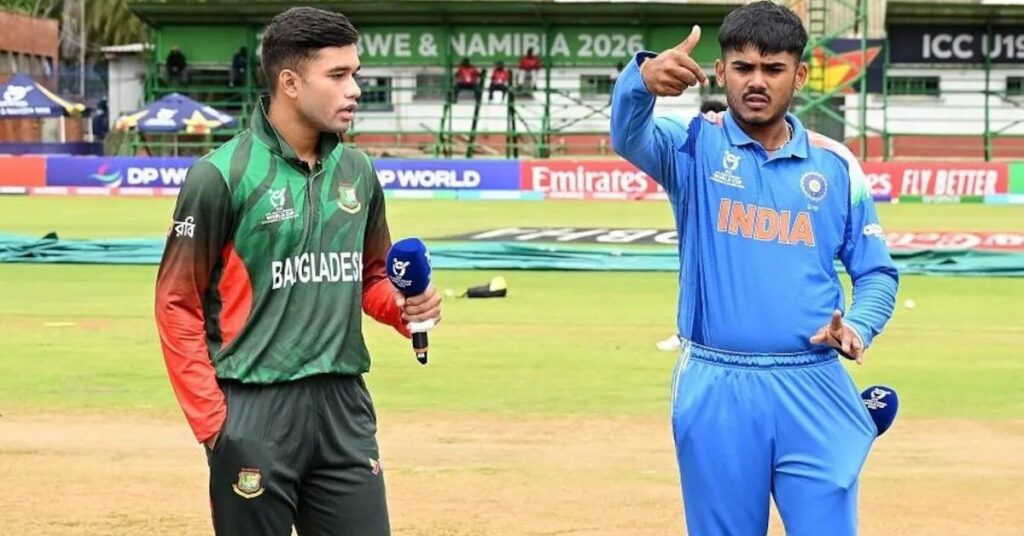

The ICC Under-19 World Cup is designed to showcase the future of international cricket—raw talent, sporting values, and competitive spirit. However, during a recent India vs Bangladesh U-19 World Cup match, the spotlight briefly shifted away from runs and wickets to a moment that sparked widespread debate: the apparent absence of a post-match handshake between players of the two teams.
The incident triggered intense discussion across social media, television debates, and cricketing circles. Fans questioned sportsmanship, emotions, and intent, while commentators dissected video clips frame by frame. Amid the growing speculation, Bangladesh finally broke their silence, offering clarification on what transpired and addressing the controversy head-on.
This blog provides a complete breakdown of the incident, Bangladesh’s official response, contextual background of the India-Bangladesh U-19 rivalry, ICC protocols, and why such moments matter deeply in youth cricket.
The Incident That Sparked the Debate
Following the conclusion of the India vs Bangladesh match at the U-19 World Cup, cameras appeared to show players walking off without engaging in the traditional post-match handshake.
Why the Handshake Matters
In cricket, the handshake is symbolic:
- Respect for opponents
- Acknowledgment of fair competition
- Closure after intense rivalry
At the Under-19 level, this gesture carries added importance, as young players are still learning the values of international sport.
The absence—or perceived absence—of this ritual immediately raised eyebrows.
Social Media Reaction: Speculation Takes Over
Within minutes:
- Clips circulated online
- Fans accused Bangladesh of unsporting behaviour
- Old rivalry narratives resurfaced
- Emotions overtook facts
Hashtags and debates escalated quickly, with little official information available initially.
Bangladesh Break Silence: Official Clarification
Amid mounting criticism, Bangladesh cricket officials and team representatives issued a clarification, addressing the controversy and rejecting claims of deliberate disrespect.
Key Points From Bangladesh’s Response
According to Bangladesh:
- There was no intentional refusal to shake hands
- The end of the match was emotionally charged
- Players were immediately directed towards team discussions
- No instructions were given to avoid sportsmanship protocols
The statement emphasised that respect for India and the game remains intact.
Understanding the Context: High-Pressure Youth Cricket
To understand the situation fully, context is essential.
Why Emotions Run High at U-19 Level
Under-19 cricket is unique because:
- Players are teenagers under global scrutiny
- Careers are at stake
- Emotions are less filtered than senior cricket
- Rivalries feel more personal
A single match can define futures—making emotional reactions more intense.
India vs Bangladesh at U-19 Level: A Fiery Rivalry
The India-Bangladesh U-19 rivalry has been one of the most competitive in youth cricket over the last decade.
Why This Fixture Is Always Heated
- Bangladesh’s historic U-19 World Cup triumph
- Several close, controversial encounters
- On-field aggression and verbal exchanges
- Fans amplifying every moment
This rivalry adds layers of pressure that go beyond the scoreboard.
ICC Protocols: What Is Actually Required?
One of the key questions raised was whether a handshake is mandatory under ICC rules.
ICC’s Position
- The handshake is a tradition, not an enforceable rule
- Sportsmanship is encouraged, not legally mandated
- Officials intervene only in cases of misconduct
Therefore, while the handshake is expected, failure to do so does not automatically imply wrongdoing.
Was the Moment Misinterpreted?
Several analysts suggested the controversy may have been over-interpreted.
Possible Factors
- Broadcast angles not showing full sequence
- Teams separating quickly due to post-match procedures
- Players heading towards support staff
- Match officials managing transitions
Bangladesh’s clarification aligns with this interpretation.
Lessons From Past U-19 World Cup Incidents
This is not the first time youth tournaments have seen controversy.
Historical Precedents
- Heated send-offs
- Over-celebrations
- Verbal confrontations
- Post-match misunderstandings
Each time, the ICC has stressed education and guidance over punishment.
India’s Response: Silence and Focus on Cricket
Interestingly, India chose not to escalate the issue.
- No official complaint filed
- Team focused on performance
- Coaching staff avoided public statements
This restraint helped prevent the situation from worsening.
Why Sportsmanship Matters More in Youth Cricket
At senior level, players are expected to manage pressure. At youth level, mistakes are part of development.
Why This Moment Is Important
- Players are future ambassadors of the sport
- Behaviour is closely observed by selectors
- Media exposure is growing
- Fans form early impressions
Handling such moments with maturity is crucial.
Bangladesh’s Development Perspective
Bangladesh cricket has invested heavily in youth development.
What the Board Emphasised
- Discipline and respect remain core values
- Emotional reactions are addressed internally
- Players are educated, not condemned
This approach aligns with modern sports psychology.
Media’s Role: Amplifying or Informing?
The incident also raised questions about media responsibility.
Concerns Raised
- Short clips taken out of context
- Sensational headlines
- Nationalistic framing
Youth cricket, critics argue, deserves more balanced coverage.
Fan Behaviour and Online Toxicity
The episode highlighted how quickly fan reactions can spiral.
- Abuse directed at teenage players
- Assumptions replacing facts
- Pressure magnified unnecessarily
Both boards urged fans to remember the players’ age and growth phase.
Expert Opinions: Calm Over Condemnation
Former cricketers weighed in with balanced views.
Common themes:
- “Let kids be kids”
- “Teach, don’t punish”
- “Context matters”
Many stressed that one moment should not define a team’s character.
What Happens Next?
From an ICC standpoint:
- No disciplinary action expected
- Incident likely considered closed
- Focus returns to tournament cricket
For Bangladesh:
- Internal review and guidance
- Emphasis on post-match conduct
For India:
- Continued focus on on-field performance
Bigger Picture: The Growth of U-19 Cricket
The controversy also reflects how Under-19 cricket is evolving.
- More media coverage
- Greater fan involvement
- Higher emotional stakes
With growth comes scrutiny—and responsibility.
Why This Should Be a Learning Moment, Not a Scandal
Rather than outrage, this incident should prompt:
- Better communication from boards
- Improved broadcast clarity
- Fan education about youth sport
Cricket’s values are best preserved through understanding, not outrage.
Key Takeaways From the ‘No Handshake’ Episode
- Bangladesh did not deliberately avoid sportsmanship
- Context and emotion played a role
- ICC rules were not violated
- Media amplification fueled controversy
Most importantly, young players deserve guidance, not vilification.
Match Should Be Remembered for Cricket, Not Controversy
Lost in the debate was the quality of cricket on display:
- Competitive bowling spells
- Pressure situations
- Emerging talents
That should remain the lasting memory.
Summary Snapshot
- Tournament: ICC Under-19 World Cup
- Teams: India U-19 vs Bangladesh U-19
- Issue: Alleged ‘no handshake’ incident
- Bangladesh Response: No intentional disrespect
- Outcome: Matter clarified, focus shifts back to cricket
Conclusion: Perspective Is Everything
The ‘no handshake’ controversy during the India vs Bangladesh U-19 World Cup match serves as a reminder of how quickly narratives can spiral in the digital age. Once Bangladesh broke their silence, it became clear that intent had been misjudged, and emotion had been mistaken for disrespect.
Youth cricket is about development—not perfection. Mistakes, misunderstandings, and emotional moments are part of the journey.
What truly matters is how teams, boards, and fans respond.
And in this case, the best response is simple:
Let the kids play. Let them learn. And let cricket remain the winner.