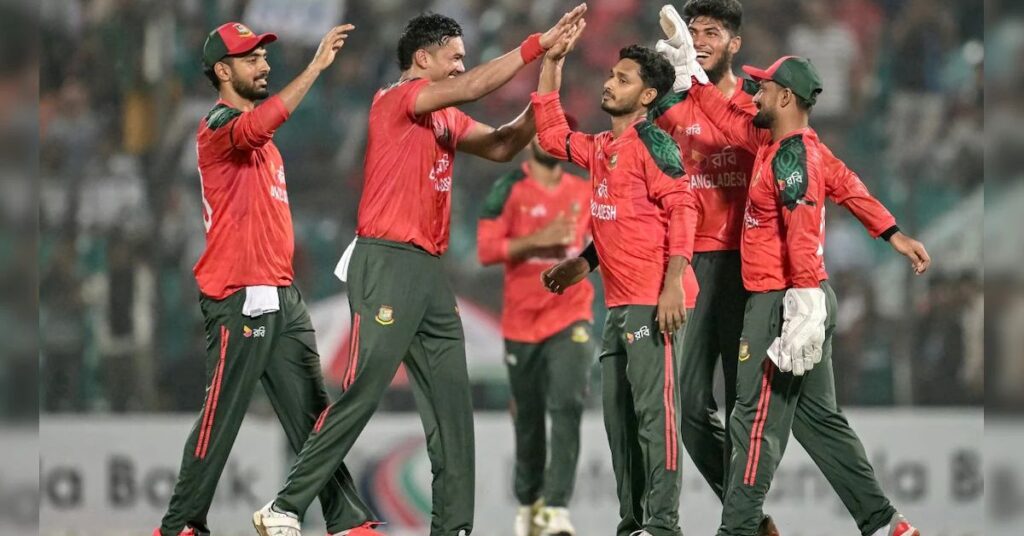

The controversy surrounding the ICC T20 World Cup has taken a fresh turn after former Pakistan cricketer Danish Kaneria openly backed the ICC, making strong remarks involving the Board of Control for Cricket in India (BCCI) and Bangladesh Cricket Board (BCB). Kaneria’s statement—“BCCI welcomed Bangladesh”—has sparked intense debate across the cricketing world, adding another layer to an already heated administrative and political row.
As cricket fans and experts dissect every development, Kaneria’s no-nonsense stance has drawn attention not only because of his outspoken nature, but also because it highlights the complex intersection of cricket, diplomacy, governance, and tournament logistics in global events like the T20 World Cup.
This blog breaks down the entire controversy, Kaneria’s comments, the ICC’s position, BCCI’s role, Bangladesh’s involvement, and what it all means for the future of international cricket.
Understanding the T20 World Cup Row
The ICC T20 World Cup row revolves around participation, hosting, scheduling, and administrative coordination, with multiple cricket boards involved. While the ICC has maintained that decisions were taken in accordance with regulations and global cricketing interests, disagreements and political undertones have fueled controversy.
At the centre of this debate lies:
- Tournament governance
- Host nation coordination
- Participation clarity
- Political sensitivities impacting cricket
This is not the first time a global ICC event has faced such challenges, but the intensity of this dispute has been particularly notable.
Danish Kaneria’s Strong Statement Explained
Former Pakistan leg-spinner Danish Kaneria, known for his blunt opinions, did not hold back while discussing the issue publicly. Supporting the ICC’s stance, Kaneria highlighted that BCCI had already welcomed Bangladesh, implying that concerns raised later lacked consistency.
His remarks suggest:
- ICC followed due process
- BCCI’s actions contradicted later objections
- Selective criticism weakens credibility
Kaneria’s comments quickly went viral, drawing reactions from fans across India, Pakistan, and Bangladesh.
“BCCI Welcomed Bangladesh”: What Does It Mean?
Kaneria’s key point revolves around acceptance and cooperation. By stating that BCCI welcomed Bangladesh, he implied that:
- There was no initial resistance to Bangladesh’s involvement
- The ICC acted within a framework already accepted by stakeholders
- Raising objections later appears contradictory
This statement has become central to the debate, as it questions the timing and intent behind criticism of ICC decisions.
ICC’s Position in the Controversy
The International Cricket Council (ICC) has consistently maintained that:
- All decisions were made after consultations
- Member boards were informed in advance
- Tournament integrity was the priority
Kaneria’s support strengthens ICC’s narrative that the governing body acted transparently rather than arbitrarily.
Why Danish Kaneria’s Support Matters
While Kaneria is no longer an active cricketer, his views carry weight because:
- He has experienced ICC governance firsthand
- He speaks without allegiance to Indian cricket administration
- He often criticizes Pakistan cricket establishment as well
His backing of ICC adds neutral credibility to the governing body’s stance.
BCCI’s Role Under The Spotlight
The BCCI, as the world’s most powerful cricket board, often finds itself at the centre of major ICC decisions. In this controversy:
- Its initial cooperation has been cited
- Later concerns have raised eyebrows
- Silence or clarification gaps have fueled speculation
Kaneria’s remarks indirectly suggest that BCCI’s position may not have been as rigid as later narratives imply.
Bangladesh’s Involvement in the Row
Bangladesh’s role has largely been procedural, but it became a talking point due to:
- Hosting or participation logistics
- Diplomatic considerations
- Regional cricket politics
By stating that BCCI welcomed Bangladesh, Kaneria implies that Bangladesh’s involvement was never truly contested at the administrative level.
Political Undercurrents in International Cricket
Cricket, especially in South Asia, often intersects with politics. This controversy reflects:
- Diplomatic sensitivities
- Regional rivalries
- Administrative power struggles
Kaneria’s comments cut through these layers, focusing on procedural consistency rather than political narratives.
Fan Reactions Across Countries
The statement has sparked mixed reactions:
- Indian fans defending BCCI
- Pakistani fans backing Kaneria
- Bangladeshi fans seeking clarity
Social media debates highlight how emotionally invested fans are when cricket governance comes under scrutiny.
Media’s Role in Amplifying the Row
Media coverage has intensified the controversy by:
- Highlighting selective statements
- Framing narratives around power politics
- Comparing past ICC disputes
Kaneria’s blunt phrasing ensured his comments became headline material.
Past ICC Disputes Provide Context
The ICC has faced similar controversies in the past involving:
- Hosting rights
- Security concerns
- Political standoffs
These precedents show that administrative disputes are not new, but public support from former players adds pressure.
Why Timing Is Crucial
Kaneria’s comments come at a time when:
- Tournament preparations are underway
- Stakeholders want stability
- Any uncertainty affects teams and broadcasters
Public disputes this close to a World Cup can undermine confidence in the event.
Impact on Players and Teams
While administrators argue, players remain focused on performance. However:
- Uncertainty can affect preparation
- Media noise creates distractions
- Team morale can be indirectly impacted
Resolving disputes quickly is essential for a smooth tournament.
Does Kaneria Have a Point?
From an analytical perspective, Kaneria’s argument rests on:
- Consistency in decision-making
- Accountability of cricket boards
- Transparency in ICC processes
If BCCI indeed welcomed Bangladesh initially, it strengthens ICC’s case.
BCCI’s Silence or Strategy?
One key discussion point is BCCI’s response—or lack thereof. This could mean:
- Strategic silence
- Internal deliberations
- Avoiding escalation
In high-profile disputes, silence can sometimes speak louder than statements.
Bangladesh Cricket Board’s Calm Approach
Interestingly, the BCB has largely avoided controversy, focusing on:
- Team preparation
- Compliance with ICC guidelines
This calm approach has earned them quiet support from neutral observers.
What This Means for ICC Governance
Kaneria’s backing reinforces ICC’s authority, suggesting that:
- Global governance must override bilateral politics
- Clear communication is essential
- Former players can influence public opinion
ICC may use this moment to assert stronger governance norms.
Expert Opinions on the Row
Cricket analysts believe:
- The issue is more administrative than political
- Public comments risk unnecessary escalation
- Resolution lies in transparent communication
Kaneria’s remarks, while blunt, reflect frustration with mixed messaging.
Lessons for Future ICC Events
This controversy highlights the need for:
- Clear documentation of decisions
- Unified communication strategies
- Early resolution of disagreements
Mega events require alignment across all stakeholders.
Could This Affect Future India-Pakistan-Bangladesh Relations?
While unlikely to affect on-field relations, administrative trust may take time to rebuild. Cricket diplomacy has always been fragile in the region.
Why This Debate Resonates With Fans
Fans care because:
- World Cups symbolize unity through sport
- Governance disputes feel like distractions
- Transparency builds trust in the game
Kaneria’s straightforward stance resonates with fans tired of politics overshadowing cricket.
Final Thoughts: A Controversy That Reflects Cricket’s Complexity
The “BCCI welcomed Bangladesh” remark by Danish Kaneria has reignited debate around the ICC T20 World Cup row, shining a spotlight on cricket governance, accountability, and communication.
By openly supporting the ICC, Kaneria has challenged selective narratives and urged stakeholders to maintain consistency. Whether one agrees with him or not, his comments underscore a vital truth—global tournaments require unity, clarity, and cooperation beyond politics.
As the T20 World Cup approaches, cricket fans worldwide will hope that the focus returns to the मैदान (field), where the game truly belongs.